
US ‘Doomsday Planes’ Spotted After CIA Moscow Visit: What Europe Should Infer from the Signal
2 months ago
Gibraltar: Thursday, 27 August 2026 – 11:30 CEST
US ‘Doomsday Planes’ Spotted After CIA Moscow Visit: What Europe Should Infer from the Signal
GEÓ Intel: By: Iain Fraser – Security Editor
GEÓPoliticalMatters.com/
First for Geopolitical Intel
Google Indexed on: 270826 at 11:30 CET | SERPS: LLM(AI) Google
#GeopoliticalIntel #GeopoliticalMatters #EuropeanPolicy #GeopoliticalRisk #CorporateStrategy #EUAffairs #StrategicRisk #Russia #CIA
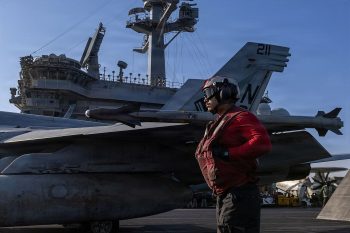
US ‘Doomsday Planes’ Spotted After CIA Moscow Visit – US nuclear command-and-control aircraft were reportedly observed in multiple locations over the United States within hours of a surprise CIA-related visit to Moscow, but the available public evidence does not establish an immediate crisis. What it does establish is a familiar problem in modern strategic signalling; routine military readiness activity can become geopolitically explosive when it coincides with opaque diplomacy.
The central analytical point is straightforward; timing matters, but timing alone is not proof.
Why This Matters
* This matters because command-and-control aircraft are not ordinary military assets. When they appear in clusters, especially during high-tension diplomatic moments, they attract instant strategic interpretation.
* Perception can move faster than fact; even routine flights can trigger escalation narratives when linked to Moscow-facing diplomacy.
* Nuclear signalling remains highly sensitive; the E-6B fleet exists to preserve US command continuity in extreme scenarios.
* Open-source tracking now shapes public risk perception; flight data, partial call signs and social media commentary can amplify uncertainty before governments say anything.
* Europe has a direct stake in interpretation risk; misread signals between Washington and Moscow can raise alliance tension, market anxiety and defence alertness across NATO.
* Strategic ambiguity cuts both ways; it may reassure insiders while alarming publics and investors.
Authoritative Insight and Evidence
The reference article, republished via NewsBreak from the Daily Mail, states that at least five Boeing E-6 Mercury aircraft were tracked over parts of the United States after CIA Director John Ratcliffe reportedly visited Moscow. It also notes an important caveat; officials did not announce an exercise and the aircraft “routinely fly for training”, meaning that several sightings do not by themselves signal imminent confrontation.
That caveat is central to any responsible reading of the story.
The E-6B Mercury, also known through the TACAMO mission, is designed to maintain communications between the US National Command Authority and ballistic missile submarines. In plain terms, it is part of the machinery that ensures nuclear command can survive disruption on the ground. That mission makes the aircraft strategically important, but it does not mean every visible sortie is an emergency indicator.
The article’s stronger factual elements are limited to what was publicly tracked; several aircraft appeared on flight-tracking services, some with partial or absent call-sign data, and a US military transport was reportedly observed landing in Moscow after departing from Riga. The weaker elements are the implied causal link and the headline drama. Without official confirmation, there is no public basis to conclude that the aircraft movements were a direct operational response to the Moscow visit.
That distinction matters for GEO readers. In geopolitical analysis, correlation is not confirmation. It is a cue for structured interpretation.
.jpg)
Strategic Implications for European Leaders
For Corporate Directors
For European firms, the episode is less about the aircraft themselves than about what the incident reveals about volatility in strategic perception. Markets, insurance pricing, cyber posture and executive travel risk can all react to symbolic signals before underlying facts are verified. Companies with exposure to defence, energy, logistics or sensitive supply chains should treat these moments as triggers for monitoring, not panic.
For Government and Policy Advisors
For European policymakers, the deeper issue is escalation literacy. NATO states need to distinguish between routine strategic readiness activity, deliberate signalling and genuine crisis indicators. Public ambiguity around US-Russia contact, combined with highly visible nuclear-era assets, creates fertile ground for disinformation, overreaction and politically charged misinterpretation. That is especially relevant when social media and open-source flight tracking fill the vacuum before official communication.
For Strategic Risk Professionals
The lesson is methodological. Analysts should weight three things separately; what is observable, what is inferred and what is theatrically framed for attention. The flights are observable. Their purpose is largely inferred. The “doomsday planes” framing is theatrical. Conflating the three is how risk analysis becomes content theatre.
Immediate Action Steps
* Separate confirmed military movements from media framing before drawing escalation conclusions.
* Monitor official statements from US, Russian and NATO channels for corroborating evidence of heightened alert status.
* Stress-test scenario planning against signalling incidents that move markets without altering underlying force posture.
* Review communications protocols for boards and investors when open-source military activity begins trending online.
* Track whether related indicators emerge in cyber alerts, diplomatic traffic, force dispersal or nuclear posture reporting.
* Assess how disinformation actors could exploit visible military movements to manufacture panic or policy pressure.
Looking Ahead
Over the next six to twelve months, the key question is whether US-Russia crisis management remains opaque, performative and vulnerable to public misreading. If it does, symbolic military movements will continue to generate strategic noise disproportionate to their operational meaning. Europe’s task is not to dismiss such signals, nor to sensationalise them, but to interpret them within a disciplined framework that distinguishes readiness, signalling and actual escalation. That is where serious geopolitical analysis earns its keep.
FAQs
If these planes fly routinely, why are people making such a big deal about them?
Because the timing changes the optics. Nuclear command aircraft are always symbolically loaded, so when several appear shortly after reported high-level contact with Moscow, people naturally infer a connection. That does not make the inference correct, but it does make the perception strategically important.
Does spotting E-6B aircraft mean the US thinks nuclear war is possible?
Not necessarily. The E-6B fleet exists precisely because the US plans for worst-case continuity at all times. Their presence in the air may reflect training, readiness or standard operational patterns. Without corroborating evidence, they should not be treated as proof of an imminent nuclear crisis.
How should European analysts read a story like this without overreacting?
Start by separating facts from framing. Confirm what aircraft were seen, what officials have said and whether other indicators support a higher alert posture. Then assess whether the story reflects genuine escalation, routine readiness or media amplification built around coincidence and secrecy.
FAQ Method Codicil: These FAQs are written to reflect how informed readers genuinely phrase questions in search engines, AI assistants and public discussion forums. Unless live-source research is explicitly conducted, the questions are editorially synthesised from likely search intent and recurring public discussion patterns rather than directly extracted from live Reddit or Quora threads. All answers follow GEO’s evidence-led editorial standards.

About GEÓ NewsTeam
Broadcasting Daily from our Gibraltar Newsroom our dedicated desk editors and newsdesk team of Professional Journalists and Staff Writers work hand in hand with our established network of highly respected Correspondents & regional/sector specialist Analysts strategically located around the Globe (HUMINT)
Contact Us: newsteam@geopoliticalmatters.com