Home » GEÓ Cybersecurity » Reportage The Emergence of Cybersecurity as a Major Geopolitical Factor – What to Know and Do Now.

Reportage The Emergence of Cybersecurity as a Major Geopolitical Factor – What to Know and Do Now.

Reportage The Emergence of Cybersecurity as a Major Geopolitical Factor - What to Know and Do Now.
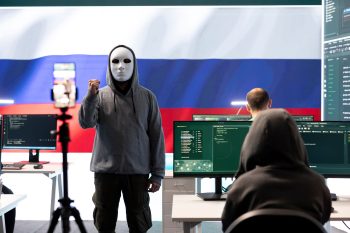
Image Credit: DC Studio

Gibraltar:  Monday, 26 January 2026 – 09:00 CEST

Reportage: The Emergence of Cybersecurity as a Major Geopolitical Factor – What to Know and Do Now.
Energy/Cybersecurity 
GEÓ Intel: Written & Curated By GEÓ NewsTeam
GEÓPoliticalMatters.com/
First for Geopolitical Intel
#Reportage #Geopolitics

Reportage The Emergence of Cybersecurity as a Major Geopolitical Factor – What to Know and Do Now.

Cybersecurity has become a major geopolitical factor because cyber operations are now used to project power, gather intelligence, disrupt services and shape public trust—often without a single shot fired. That shift matters now because the systems people rely on every day (email, cloud platforms, payments, communications and public services) sit on the same contested digital terrain. This article explains the main drivers, what attacks look like in practice, and the most effective steps to build resilience.

Why This Matters

This matters because geopolitically driven cyber activity raises the baseline level of digital risk for everyone—organisations and individuals—by increasing disruption, deception and “spillover” incidents.

Key risks and impacts:

* Service disruption: websites, networks, or platforms become unavailable through denial-of-service or targeted outages.

* Espionage and data access: sensitive information is collected quietly over time, often through compromised accounts.

* Fraud and impersonation: attackers exploit confusion, urgency and trust to trigger payments or credential theft.

* Supply-chain spillover: compromise or disruption at a provider can cascade to many downstream users.

* Erosion of trust: deepfakes, disinformation, and account takeovers undermine confidence in what’s real and who’s authentic.

Reportage The Emergence of Cybersecurity as a Major Geopolitical Factor - What to Know and Do Now.

Authoritative Insight

Cybersecurity as a geopolitical factor means cyber capabilities are used to pursue national objectives. Cyber power can support diplomacy, coercion, intelligence collection, and military aims—while keeping attribution difficult and costs relatively low.

Three realities define today’s landscape:

* Cyber operations scale well. A single technique (phishing, credential stuffing, vulnerability exploitation) can be reused widely, especially when automated.

* The line between “state” and “non-state” blurs. Some groups are directly state-run; others are criminal, tolerated, or indirectly aligned. The effect is a broader, more persistent threat environment.

* Disruption is strategically useful. Taking services offline can create economic pressure, media attention and public uncertainty—even if no data is stolen.

A practical takeaway: most successful attacks still rely on predictable weaknesses—reused passwords, unpatched systems, overly broad access, and slow detection. That’s good news, because defensive fundamentals reliably reduce risk even as geopolitics heats up.

Geopolitical cyber risk changes impact depending on dependency and exposure. In general, organisations and individuals are most affected where digital services are concentrated and trust is assumed.

Common factors that increase vulnerability or consequence:

* High reliance on cloud and identity: one compromised account can unlock email, files, chats, and admin consoles.

* Single points of failure: one DNS provider, one identity provider, one remote access method, one payments processor.

* Complex supplier chains: more vendors mean more paths for disruption and compromise to travel.

* Privilege sprawl: too many admin accounts, shared credentials, and “everyone can access everything” permissions.

* Low visibility: limited monitoring and unclear ownership of incident response actions delays containment.

* Human trust under pressure: urgency, authority cues, and plausible messages drive clicks and transfers.

Forward Insights

Over the next 1–3 years, cyber activity tied to geopolitical tension is likely to increase in volume and “blast radius”, especially through supply chains and widely used platforms. The organisations and individuals who focus on identity security, fast patching, least privilege, and rehearsed recovery will experience fewer incidents—and recover faster when disruption does happen.


Geopolitical Intel

About GEÓ NewsTeam

Broadcasting Daily from our Gibraltar Newsroom our dedicated desk editors and newsdesk team of Professional Journalists and Staff Writers work hand in hand with our established network of highly respected Correspondents & regional/sector specialist Analysts strategically located around the Globe (HUMINT)
Contact Us: [email protected]

Translate »
geopoliticalmatters.com